Showing posts with label Kitchener. Show all posts

Thursday, December 11, 2014

Zion Evangelical Church Follow-up And Church Records I Didn't Expect To Find

In my last post, I recounted my wife Ellen's family connection to Zion Evangelical Church, now Zion United Church, located in Kitchener, Ontario. Ellen's paternal great grandfather, Rev. Louis Henry Wagner, and paternal great-great grandfather, Rev. Jacob Wagner, were both pastors of the church.

At the time of our visit to the church in late October, the church was closed and we learned that the church building had been sold to a Kitchener developer, the sale to be finalized in June 2015. One month later, we returned to Kitchener and visiting the church was on our priority list of things to do. Really, what we wanted was just a chance to take a photo of the church sanctuary and pulpit used by Ellen's great grandfather. We were seeking a family keepsake; what we got was so much more!

Ellen (Wagner) Hadden standing in front of the sanctuary and pulpit where her great grandfather, Rev. Louis Henry Wagner, held Sunday services and preached at Zion Evangelical Church (now Zion United Church) in Kitchener, Ontario

We were greeted by the current church Pastor, secretary, and treasurer. After a warm welcome, we explained our interest in their church and they immediately pointed us to a collage they maintain of all the pastors in the church's more than 170-year history. The collage (seen below) is located in a display case and includes photos of both of Ellen's ancestors.

Collage of Ministers who have served Zion Evangelical/United Church in Kitchener, Ontario. Rev. Jacob Wagner is top row, fourth from the left, and Rev. Louis Wagner third row, fourth from the left (my apologies for the glare from a fluorescent ceiling fixture that partly obscures the top row of photos).

Unexpectedly, we were provided by the church treasurer with a private tour of every part of the church building, including an accounting of some of the church's history.

As an added bonus, when our tour was wrapping up, we were shown a display of some church artifacts that had been found as the church begins it's decommissioning. The church will be sending it's records and artifacts to the United Church of Canada Archives and so what we were shown were some of the duplicate copies of church records from 1914-1915. 

Copies of the church's annual reports listed all members of the congregation and the amounts of their financial contributions to the church and it's missionary endeavours. The church congregation list, complete with the addresses of all the church's members. Special church service programs such as that used in September 1954 to mark the centennial of Kitchener, complete with a church history and photos compiled by Ellen's first cousin, three times removed Albert Liborius Breithaupt.

The cover of the Zion Evangelical Church service program celebrating 
the Centennial of the City of Kitchener in 1954

When we think of church records there is a tendency to restrict ourselves to baptisms, marriages, and funerals or burials. The records I saw, a couple of which I now possess, thanks to the good folks at Zion United Church, show the opportunity to have a different view into the church life experienced by our ancestors. What great finds!

Sadly, the final church service at Zion United Church will take place on June 7, 2015. We intend to be there.

Sunday, November 16, 2014

The End Of An Era For A 'Family' Church

The end is drawing close.

Zion United Church, located at 32 Weber Street in Kitchener, Ontario, has been sold and will cease to function as Zion United Church in 2015.

Zion United Church (formerly Zion Evangelical Church), 32 Weber Street, Kitchener, Ontario (photo by Ian Hadden, 2014)

The Evangelical Association was basically a German Methodist church that eventually merged with the United Church of Canada. Sadly, the decline in the number of parishioners and attendance, down to 25% of what it was forty years ago, means that the church's operating costs are much higher than it's revenue. So, the church has been sold. Fortunately it's exterior is protected under the Ontario Heritage Act.

For my wife's Wagner ancestors, this church played a central role in their lives dating back more than 150 years. 

Third great grandfather Jacob Hailer was instrumental in helping to establish a church for what was then the Evangelical Association. He allowed his workshop to be used as the first church Sunday School. He also permitted the traveling Evangelical Association ministers to stay in his home when they visited the then village of Berlin, Canada West.

One of those itinerant ministers, Jacob Wagner married Jacob's eldest daughter Margaret in 1849. Their eldest son, Louis Henry Wagner, my wife's great grandfather, would follow in his father's foot steps, become a minister, and eventually pastor of the Zion Evangelical Church.

Margaret's sister, Catherine married Jacob's best friend Louis Breithaupt in 1853 and, as their family grew to prominence in the growing community of Berlin, they too centered their lives around Zion Evangelical Church.

When Margaret died in 1918 (shortly after Berlin was re-named as Kitchener), her son Louis as church pastor used the church's stationery to pen a poem in tribute to his mother.

Zion Evangelical Church stationery used by Rev. Louis Henry Wagner to author a tribute poem to his mother Margaret Hailer Wagner Bean on her death in 1918. (Note that the church address at the time was 10 Weber Street (now 32 Weber Street) and that the central steeple of the church is now missing)

The tribute poem for Margaret Hailer Wagner Bean of Rev. Louis Henry Wagner reads as follows:

Memories of Our Mother

Our Mother's gone.
The fields, from which she gleaned
The fallen stock of golden grain
Have long since given their ripened store
To other hands. The orchard, bright in bloom,
And promise of a full supply,
Will yield its burdened bough to others
Will these too be as generous with their gifts
As she was want to be?
Or withholding much, impoverish but themselves?
Her home, where, through these many years
Of saddened widowhood,
She reigned serenely well,
--- Her word was law,
Respected every wish ---
That home, of daughters well brought up,
And sons much loved and honored true,
Will miss the mother's smile.
Her gentle words of caution and of love
Will n'er be heard again.
Her voice is gone. Her hand,
So warm to welcome home,Will never give its kindly hold
To those she loved so well.

The stranger, made a noble friend,
Will miss her cordial help.
Her church has long since ceased
To see her in her wanted place;
But when the ring of bell will call to worship here,
Her memory still continues fresh and sweet
And long to come, when we
And here this house of God have passed away,
She still will linger on in hallowed thought.

Our Mother's gone? No. Never.
Her disembodied spirit may linger near,
And still its good unfold.
Her smiles, her words, her loving deeds
Will never pass away.
She lives. Though to its place
We lay her washed frame, she lives.
Our Mother lives, and loves us still.
And when this sad requiem is o'er,
And each his weary way
To distant home we break,
The memory of our mother dear will linger.
Her soothing hand will still be laid on throbbing brow.
Her smile will cheer the lonely heart.

Sunday, June 8, 2014

52 Ancestors: Margaret Wagner Bean (nee Hailer) 1831-1918

Amy Johnson Crow of the No Story Too Small genealogy blog suggested a weekly blog theme of '52 Ancestors' in her blog post "52 Ancestors in 52 Weeks." I decided to take up the challenge of the 52 Ancestors blog theme as a means to prompt me into regularly sharing the stories of my ancestors. So over the course of 2014 I will highlight an ancestor, sharing what I know about the person and perhaps more importantly, what I don't know.

Over the past several weeks I have been highlighting one of my direct ancestors. This week, I am stepping away, just a little, from that practice. Rather than one of my direct ancestors, I am turning the spotlight onto one of my wife Ellen's direct ancestors, her great great grandmother Margaret (or Margaretha) Wagner (nee Hailer).


Margaret Wagner Bean (nee Hailer) in 1906


The reason for this variance is simple. A week ago, Ellen and I were in the cities of Kitchener and Waterloo, Ontario to attend a family funeral. While driving to our hotel, I pointed to a street sign and Ellen's eyes lit up as she knew the significance of the street name.


Margaret Avenue street sign (at intersection with Bridgeport Street East, Waterloo, Ontario)


Margaret Avenue runs roughly north from Kitchener's downtown core, beginning at Queen Street North, to it's termination just south of University Avenue in Waterloo. Margaret Avenue is also named in honour of Ellen's great great grandmother Margaret Wagner (Fear, Jon, Flash from the Past: Many a train passed under Margaret Avenue Bridge, Kitchener Waterloo Record, 17 Dec 2010).

Margaret was born Margaretha Hailer, the eldest child of Johann Jacob Hailer and his wife Margaret Riehl. She was born in 1831 in Chippewa (now Niagara Falls), Upper Canada. Her parents, Jacob and Margaret Hailer settled in Chippewa soon after they married in 1830 but, not long after the birth of their first child, they moved to Berlin (now Kitchener), Ontario. According to author and biographical sketch compiler A. J. Fretz (born 1849), Jacob and Margaret Hailer were the first German born settlers in the town of Berlin (Fretz, A. J.. A genealogical record of the descendants of Christian and Hans Meyer and other pioneers : together with historical and biographical sketches. Harleysville, Pa.: News Printing House, 1896, page 122).

Margaret grew up in Berlin with her four sisters - Catherine, Harriet, Marion, and Caroline - and their one brother, the youngest of the children, Jacob. In 1849 Margaret married Jacob Wagner, a minister in the Evangelical Association. Following their marriage the young couple set up house near Buffalo, New York where Jacob's ministry as a preacher was headquartered. It was here that Margaret and Jacob were joined by their two children, Catherine, or Kate  as they called her, in 1851 and Louis Henry, who later followed in his father's footsteps becoming a minister, in 1857. Life on the road was hard for Jacob and his health suffered as a result. So in November 1857, he decided to give up preaching and entered into a business partnership with his best friend Phillip Ludwig 'Louis' Breithaupt, a Buffalo tanner. Louis Breithaupt was also Jacob's brother-in-law, having married Margaret's sister Catherine after Jacob had introduced the two to each other. Each of them would contribute between $3,000-$4,000 dollars as capital to start a tannery operation In Berlin.

Margaret must have been elated at the prospect of having her husband home all the time, especially since the new business was to be established in Berlin, not far from her parental home. On April 1st, 1858, Jacob Wagner and Louis Breithaupt finalized their partnership agreement for what would become the Eagle Tannery. Jacob Wagner was established as the partner responsible for running the operation.

The good fortune did not last long however. Jacob died suddenly on 19 April 1858. Margaret's parents were there to comfort and support the young widow, ensuring that Kate and young Louis went to school. In 1862, Margaret met and married Daniel Bean (Biehn), a school teacher and farmer from Blandford in neighbouring Oxford County. On marrying Daniel, Margaret left her son Louis in the care of her father so he could continue his education, at least until young Louis convinced his grandfather Jacob Hailer and uncle Louis Breithaupt that what he really wanted was to apprentice in the tannery business, a career that didn't last long.

Margaret moved around southwestern Ontario with her husband Daniel as he moved between school teaching jobs. During their marriage, Margaret and Daniel had six known children. In 1885 Margaret was again widowed when Daniel died in Mildmay, Ontario. Now on her own and in her mid-50's, Margaret moved back home once more where she lived in a house with her two youngest children Jacob and Margaret 'Alma" Bean. When Alma married Alfred Bender in 1907, Margaret moved into a house with them.


On the morning of Sunday, July 7, 1918, Margaret (Hailer) (Wagner) Bean was found dead. Dr. J. F. Honsberger, the coroner, would determine that the cause of death was apoplexy (or stroke). Margaret was laid to rest on 12 July 1918 next to her first husband Jacob Wagner and beside her parents and Breithaupt in-laws in Kitchener's Mount Hope Cemetery.

Wednesday, May 15, 2013

From Tragedy To Dare - The Doerr Family Connection

As I shared in my last post, I have been carefully examining the excellent work of the late Ruth Merner Connell who self-published a genealogy of Ellen's ancestral Merner family in 1976. The book has been an excellent resource helping me to add on to the Merner family information I had already discovered. As I have entered each fact into my genealogy database from the Merner genealogy book, I am careful to ensure that nothing is entered without a source citation. 

In addition  I have been 'auditing' the contents of the book to ensure that the facts it presents can be verified with primary source documents, something that Ruth Connell used when available but didn't always have easy access to. I am about half way through the book and have been impressed to find that about 98% of the facts it contains are accurate. Small errors occur likely due to typographical errors (the book is about 600 pages long and each paged was typed on one of those old-fashioned things called typewriters).

Among the stories that I have uncovered was that of Irene Nelda Merner, Ellen's second cousin twice removed. Irene was a great granddaughter of Ellen's 3X great grandparents Jacob Emanuel Merner (Muerner) and Susanna Schluchter. 

Irene's father Ammon Merner was a hard working machinist/moulder who worked in the town of Waterloo, Waterloo County, Ontario where Irene was born in 1890. At the age of 26, in 1916, Irene married a young man from Berlin, now Kitchener, Ontario, named Weybourne Doerr. The newlyweds settled into married life in Kitchener and in July of 1917, their little family expanded when their first child, a son they named Carl Merner Doerr, was born.

The year 1918 however brought tragedy to the family as both Irene and her husband Weybourne died, within two days of each other, as a result of the 'Spanish grippe' or pandemic flu. Carl was orphaned at just fourteen months of age and would be raised by his paternal grandparents, Charles Henry Doerr and his wife Susannah Wagner.

Grandfather Charles Doerr had established and operated a small 'grocery' store and biscuit bakery in Berlin, Ontario. Charles brought his grandson Carl into the business and began teaching him the ways of business world. In 1941, when he was just 24 years of age, Carl was forced to take over the business when his beloved grandfather died.

Carl, Ellen's third cousin once removed, continued to grow the business and in 1945, he changed the family and company name to Dare. The company is now one of the largest food companies in North America, known for Melba Toast, Viva Puffs, Bear Claws, Real Fruit Gummies, Wagon Wheels (one of my favourites as a kid), and a large variety of cookies. Carl's Dare Foods company was the first to introduce the resealable tin tie bag in 1954. Not only was Carl a great entrepreneur but he also demonstrated great philanthropy through contributions to the local symphony, hospital, conservation authority and through his foundational work in establishing the University of Waterloo.

Carl Dare/Doerr was inducted into to Waterloo Region Hall of Fame in 2008.


Tuesday, April 23, 2013

OMG! Not Another Politician In The Family Tree

My family was politically active. We voted. Regularly. Never missed an opportunity to exercise our franchise. We always took the responsibility, and the privilege, of being able to cast a ballot very seriously. 

We campaigned for candidates. I spent many hours dropping off campaign literature before I was even old enough to vote. My father, in particular, often lead campaigns for candidates with whom he was close. We were never candidates. We just managed the political campaigns for those who sought elected office.

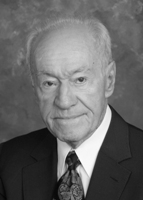
Ellen's family, on the other hand, is full of elected officials both in Canada and the United States. One of her great grandfathers was the Mayor of Livermore, California. Several of her cousins were the Mayor of Berlin, later Kitchener, Ontario. Her cousins have been Members of Parliament at both the provincial and federal levels, and a second great uncle was a Canadian Senator. Recently, I found another politician 'hanging' in her family tree - Jonathan Joseph Merner (pictured below from his official Parliament of Canada biography).


Jonathan, Ellen's first cousin, three times removed, was born  in Blake, Huron County, Ontario, then Canada West,  and raised on the family farm. His father, Gottlieb Merner, was a younger brother to Sen. Samuel Merner and had immigrated with his family to British North America around 1837 or 1838 from his native Switzerland. When Jonathan was quite young, his family moved to the village of Hay in Huron County, Ontario where Jonathan attended school. Eventually, Jonathan struck out on his own, finding employment with Mr. D. D. Steinbach, a general merchant in Zurich, Ontario. His experience with Steinbach enabled Jonathan to open his own successful mercantile shop, which would come to include a large evaporator and apple jam factory. 

On September 21, 1911, Jonathan was elected to represent the federal riding of Huron South in the Parliament of Canada as a member of the Conservative Party. He represented the people of his riding in southwestern rural Ontario for the next ten years, losing his Parliamentary seat in the December 1921 election.

Jonathan died of an embolus during pancreatic surgery at the Hotel Dieu hospital in Windsor. Ontario on February 25, 1929. His death registration lists his occupation at the time of his death as Retired Builder.

Interestingly, Jonathan's biography on the Parliament of Canada website lists his date of death as February 26, 1929. For the government being off by one day might be close enough; for a genealogist, it's wrong.

Tuesday, September 4, 2012

Louis Henry Wagner's Second Family


Just over a year ago, I wrote about the diaries kept by my wife's great grandfather, Rev. Louis Henry Wagner.

Louis was born in 1857 in Grove, Alleghany, New York state to Rev. Jacob Wagner and his wife Margaret (nee Hailer). By the time, Louis was a year old, his father had decided to end his career as a minister and he entered into a business partnership with his brother-in-law, Louis Breithaupt. Sadly the partnership in a tanning business located in Berlin (now Kitchener), Ontario ended abruptly when Jacob died in 1858. The tannery that he and Louis Breithaupt established went on to prosper as one of Berlin's major companies with the Eagle Tannery building still a part of Kitchener's downtown core.


While Louis Henry Wagner worked in the family tannery, he eventually became a minister in the Evangelical Association and married Mary Staebler. In a series of diary entries, Louis described his wife's death of typhoid fever in 1887, on the first birthday of their son, Louis Jacob Gordon Wagner, my wife's grandfather. Just over two years following the death of his wife Mary, Louis married for a second time. His second wife was Sarah Lodema Moyer (whose family is the subject of voluminous 'genealogical record' compiled by Rev. A. J. Fretz in 1895).

Louis and Sarah appear to have lived a good and stable family life until their deaths in 1945 and 1941, respectively. Below is a family photo, taken around 1908 - 1910 of Sarah (far left) and Louis (far right) with their children, from left to right: Ida (born in 1893), Margaret Florence (born 1898), Louis Jacob Gordon (from Louis' first marriage, born 1886), and Carl Henry (born 1897).


Louis and Sarah Wagner are buried together in the Mount Hope Cemetery located in Kitchener, Ontario.


Sunday, February 12, 2012

The Stamp Club As A Genealogy Source


I have found some things pertaining to my genealogy research in unexpected but I never imagined that a stamp club, more properly, a philatelic society newsletter, would be a source for genealogy information.

While working through one of my assignments for a National Institute for Genealogical Studies course, I found a newsletter for the British North America Philatelic Society's Postal Stationery Study Group. Specifically in the group's September 2002 newsletter (Volume 18, No. 2), there was an article about the postal stationery cards, more commonly post cards, used by The Breithaupt Leather Company of Berlin, Ontario. This is the tannery and leather goods company formed through a partnership between my wife, Ellen's second great grandfather Jacob Wagner and his friend and brother-in-law Louis Breithaupt.

Following Jacob's unexpected and early death in 1858, Breithaupt continued the company under his name. The tannery, known in Kitchener, Ontario as the Eagle Tannery, once one of the largest tanneries in Canada, perhaps North America, closed in 1950. Below is an image of the used post cards from the Breithaupt Leather Company that the philatelic society posted in it's newsletter.


The newsletter contained more importantly an excellent article written by Chris Ellis that details the history of the leather company, including Jacob Wagner's involvement. The article also as a bonus cites the source of much of its information including a PhD dissertation.

Lesson learned - expect the unexpected! Findings additional sources of family history information may turn up in the most unusual places.


Tuesday, August 30, 2011

Young Louis Henry Wagner


Louis Henry Wagner began a diary, really a set of what turned out to be four leather-bound diaries, when he was 15 years old. The diaries document some of the milestones, good and bad, that occurred in his life. The diaries are important records of the events in the Wagner and Breithaupt families during the latter half of the 19th century as well as providing an interesting perspective on the life of a young man living in Berlin (now Kitchener), Ontario, Canada during that pre-cable television, pre-video game era.

Louis began his diaries on December 15, 1872. His accounts of life at that time are filled with church services that were clearly at the centre of the family's life, completing a range of chores and errands like "fetching" hides for the Breithaupt's Eagle Tannery or loads of hen dung for use as fertilizer, and fishing with his cousins. Christmas 1872 is described as a time of for church services in the morning and the evening. In between, the family "had a splendid turkey for dinner." Louis received a 'cravat' from his mother Margaret (Hailer) Bean (previously Wagner) and her sister "Aunt [Catherine (nee Hailer)] Breithaupt (pictured above right in 1907)." In addition, he received 25 cents from "Grandmother Breithaupt" [Barbara Catharina Goetze].

Louis was born in Grove, New York, USA in 1857. When he was only one year old, his father Jacob died, just a couple of months after moving the family to Berlin, Ontario. Louis' mother, Margaret re-married in 1862, shortly after Louis' fifth birthday. Interestingly, among all of his recording of the family member visits to his home and trips being taken by family members to neighbouring towns and villages to visit relatives, Louis always refers to his mother's second husband, Daniel Bean, as "Mr. Bean" and never references him as his step-father. While I can't assume that there were any problems between Louis and Daniel Bean, the references don't suggest to me a close relationship.

By the time Louis had begun his diaries he was living with the Breithaupt family, his Uncle Louis Breithaupt and Aunt Catherine along with their children, Louis' cousins. It is clear from many of Louis' early diary entries that he felt a particular affection for his Aunt Breithaupt. In early December 1872, Aunt Breithaupt gave birth to her ninth child, Catherina Louise 'Katie' Breithaupt. Aunt Breithaupt, as Louis consistently referred to her as, experienced a tough time recovering from the childbirth. As Louis described in his January 2, 1873 entry, "I had to go along to Preston with the teams to fetch hides today. Aunt Breithaupt was very weak this evening. Johnny [cousin John Christian Breithaupt] and I had to go and fetch Doctor Bowlby. We brought Aunt Brehler [referring to Harriet Brehler (nee Hailer)] along out. When we came home Aunt Breithaupt had given them all a farewell in this world, she thought she had to die, but she got better again."

In addition to describing the gradual recovery to good health of Aunt Breithaupt, Louis left behind a record of weather reports for his southern Ontario town and a unique glimpse into teenage life during a time long past.

Tuesday, August 23, 2011

The Town of Berlin Becomes Kitchener


Today, August 23rd, marks the ninety-fourth anniversary of the Ontario cabinet's 'order-in-council' that officially changed the name of the town of Berlin to Kitchener. The name change became effective as of September 1, 1917. In recognition of this historic and then controversial decision, I am re-sharing a post from the past about the views and involvement of some of my wife Ellen's family's involvement in the controversy.

When the Wagners and their cousins, the Breithaupts, settled in what was originally Canada West, now the province of Ontario, Canada, they chose to live, naturally enough, in the predominantly German settlement of Waterloo County, specifically in the town of Berlin. Jacob Wagner and Louis Breithaupt married Mary and Catherine Hailer, respectively, who were the daughters of the first German settler in the region, Jacob John Hailer. The area also featured a large Mennonite community that had immigrated from Pennsylvania.

With the outbreak of World War 1, however, things changed quickly as the German heritage became the focus a growing enmity lead by non-German residents. A bust of Kaiser Wilhelm II went missing twice from Victoria Park in the centre of the town and then disappeared for good. Recruitment for the local battalion was seen as being too slow, perceived as a symptom of an unpatriotic community heritage.

In 1916, a movement began to rename the town and although it did not have popular support, names were put forward to be decided upon through a referendum. Those in favour of the name change argued that maintaining the name of Berlin was unpatriotic and bad for business. Those in favour of keeping the name pointed to the bustling manufacturing sector unharmed by the town name and argued that the time was not right to be spending time on a name change debate when raising recruits and funds for the war effort should be the focus of attention.

The opinion of the Breithaupt family, as prominent citizens of the town, was considered to be of importance. The Breithaupts opposed the name change and suffered attempts at intimidation as a result. On May 12, 1916, about a week before the scheduled referendum, W. H. Breithaupt (pictured above right), then president of the Berlin and Northern Railway, had his home vandalised by "men in uniform" who cut his telephone line and rang his front door bell repeatedly before slipping a threatening note under in front door "stating what would happen if he did not support the change of name bylaw."

On May 19th, 1916 only 892 citizens out of about 15,000 cast their votes. W. H. Breithaupt the following day lamented in a letter, "We had a citizens vote yesterday on the question of changing the name of our city, a name it has had for nearly a hundred years, and I regret to say that those who want to change won by a small majority. No new name is as yet selected." The name was subsequently changed to Kitchener in honour of Lord Kitchener, Britain's Minister of War who died when his ship hit a mine and sank off the Orkney Islands.

The Breithaupts remained a family of prominence in the newly named city and today a city park and neighbourhood bears their name.